Compost Extract Enzyme Supplier Checklist for Production Managers
Selecting an enzyme supplier for compost extract and biofertilizer production is not only a purchasing decision. It affects batch timing, substrate conversion, downstream handling, microbial viability, label consistency, and how confidently your team can reorder before the next production cycle.
Rootwake Bioprocess supports biofertilizer manufacturers that need practical, production-aware enzyme supply for compost extract preparation, carrier conditioning, organic substrate conversion, and process repeatability. If your plant is qualifying a new enzyme supplier for biofertilizer manufacturing, use this checklist to compare more than price.
Why supplier selection matters in compost extract production
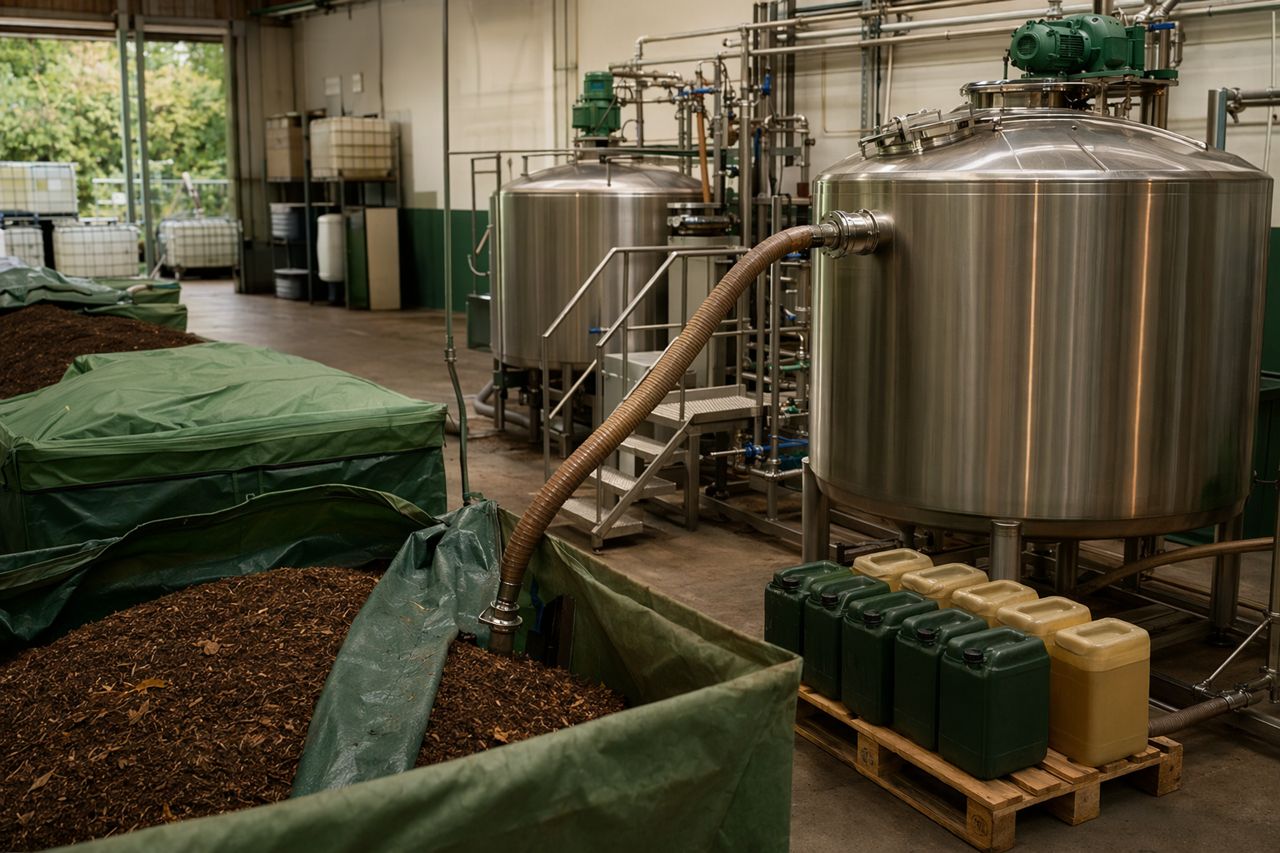
Compost extract systems are living, variable, and sensitive to upstream material quality. Enzymes may be used to support the breakdown of plant residues, composted organics, carrier-bound nutrients, and microbial nutrient sources before blending or inoculation.
A supplier that understands industrial biofertilizer production should help you reduce surprises in:
- substrate wetting and breakdown behavior;
- viscosity and solids handling during mixing;
- filtration, screening, or settling performance;
- compatibility with microbial inoculants and carriers;
- storage stability after receipt;
- documentation readiness for internal quality review;
- repeat supply across seasonal production peaks.
The right partner should make the purchasing process easier for production, quality, procurement, and warehouse teams.
The production manager’s supplier checklist
1. Confirm the intended production role
Before evaluating enzyme options, define where the enzyme will be used in your process. Compost extract applications can vary widely from plant to plant.
Clarify whether the enzyme is intended for:
- compost extract preparation;
- pre-treatment of plant-based or humic substrates;
- carrier conditioning before inoculation;
- reduction of heavy organic residues;
- improvement of liquid handling or solids separation;
- support of consistent nutrient release profiles;
- batch standardization across raw material variation.
A capable supplier should ask how the enzyme fits into your actual workflow instead of recommending a generic product name without process context.
2. Check format options against your plant handling reality
The ordering format should match your storage, dosing, and safety procedures.
Common commercial considerations include:
- Liquid concentrates for easier dispersion into mixing tanks or extract preparation vessels;
- Powder formats for longer storage flexibility and lower inbound freight burden;
- Granular or low-dust formats where operator handling and housekeeping are priorities;
- Custom blends when multiple substrate targets are part of the same pre-treatment step.
Ask whether the supplier can recommend a format based on your mixing equipment, addition point, carrier type, water quality, and batch sequence. A practical supplier should understand that the best enzyme on paper can still fail if it creates clumping, foaming, dust, or handling delays on the plant floor.
3. Evaluate documentation before the first order
Documentation should be reviewed before purchase, not after material arrives at receiving.
Request the following where applicable:
- product specification sheet;
- certificate of analysis aligned with agreed release criteria;
- safety data sheet;
- allergen or sensitization handling guidance where relevant;
- country-of-origin and manufacturing-site information;
- recommended storage and handling conditions;
- shelf-life statement;
- packaging configuration;
- lot traceability format;
- change-notification expectations.
For biofertilizer manufacturers, documentation is not just a quality formality. It supports internal approvals, customer audits, inventory controls, and investigation of batch deviations.
4. Ask how the supplier supports organism viability
In biofertilizer manufacturing, enzymes must be considered alongside living organisms. The supplier should be able to discuss process compatibility without making unsupported biological claims.
Key questions include:
- When is the enzyme best added relative to microbial inoculation?
- Are there known incompatibilities with common carrier systems?
- Does the enzyme preparation contain preservatives, salts, or processing aids that should be reviewed?
- Is the product suitable for pre-treatment before live culture addition?
- Can the supplier help define a plant trial that monitors handling, conversion, and viability outcomes?
Rootwake Bioprocess approaches enzyme supply with the understanding that the finished product is living. Enzyme performance is valuable only if it supports the full manufacturing objective.
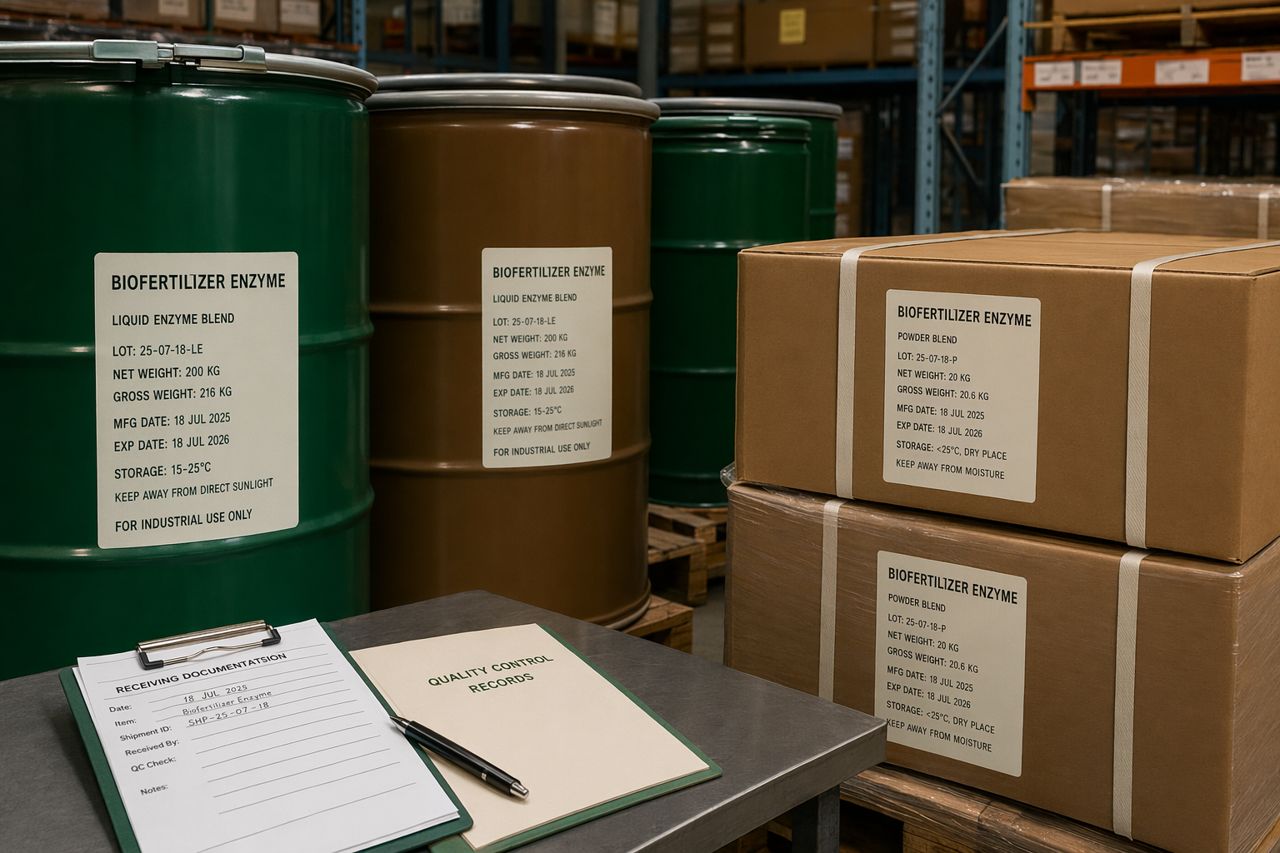
5. Review packaging for warehouse and batch use
Packaging affects labor, waste, contamination risk, and reorder planning.
Compare suppliers on:
- container sizes aligned with normal batch consumption;
- resealable packaging for partial use;
- liner integrity for powders;
- drum or tote compatibility for liquid formats;
- pallet configuration and stacking suitability;
- label readability for receiving and batch records;
- lot coding that is easy for operators to capture;
- packaging durability during freight and seasonal storage.
A lower unit price can become expensive if the packaging slows charging, creates residue loss, or does not match your batch cadence.
6. Confirm logistics and lead-time reliability
Biofertilizer production can be seasonal. Supplier reliability matters most when compost inputs, carrier materials, inoculants, packaging, and labor are all being scheduled around the same campaign.
Ask each supplier:
- What is the typical lead time after order confirmation?
- Which items are stocked versus made to order?
- Can forecasted demand be reserved?
- Are alternate shipping lanes available during disruption?
- How are temperature-sensitive shipments handled?
- What happens if a lot is delayed or rejected?
- Can the supplier support repeat orders with the same specification target?
A production-aware supplier will help you plan around campaigns instead of forcing your team into reactive purchasing.
7. Match storage guidance to your facility
Storage instructions must be realistic for your warehouse environment.
Review whether the product requires:
- controlled temperature storage;
- protection from moisture;
- protection from direct sunlight;
- first-in, first-out inventory management;
- separation from incompatible materials;
- resealing after opening;
- defined handling after partial use.
If your plant operates in hot, humid, or dust-heavy conditions, discuss this early. The best supplier guidance is practical enough for receiving, warehousing, and production teams to follow consistently.
8. Plan trials around plant outcomes, not isolated claims
A supplier trial should evaluate production behavior and finished-product relevance.
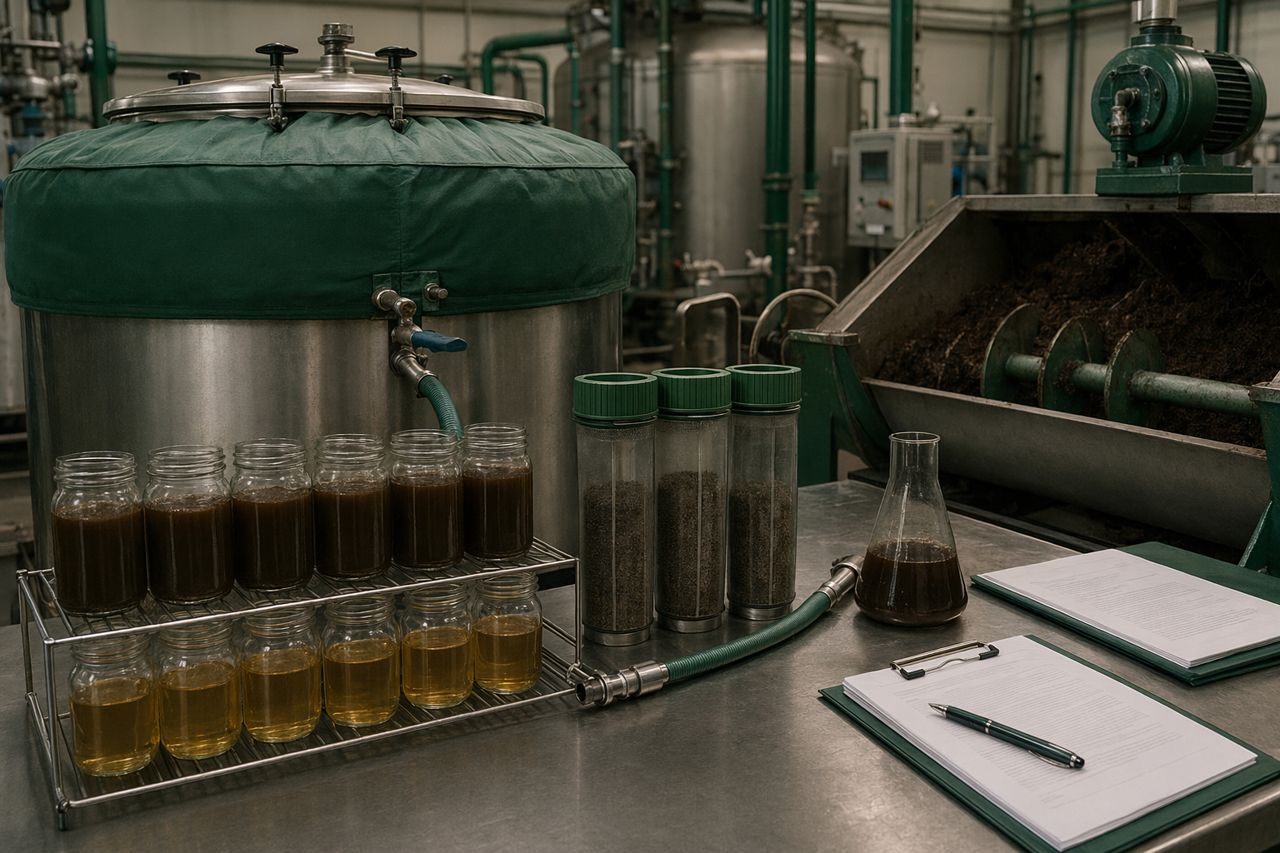
Useful trial observations may include:
- ease of charging into the process;
- dispersion in the intended mixing system;
- visible substrate breakdown behavior;
- changes in viscosity or suspended solids;
- downstream screening or settling behavior;
- compatibility with carrier materials;
- timing relative to inoculation;
- finished blend consistency;
- operator feedback;
- quality review notes.
Avoid supplier comparisons based only on brochure claims. The better question is whether the enzyme makes your process more predictable.
9. Define reorder planning before scale-up
Once a trial is successful, the next risk is supply continuity. Before moving to routine use, align with the supplier on:
- minimum order quantities;
- typical reorder lead time;
- forecast sharing;
- reserved production slots;
- lot-to-lot documentation;
- packaging availability;
- emergency replenishment options;
- communication path for specification or supply changes.
For production managers, reorder planning is a form of process control. A dependable supplier helps protect the manufacturing schedule.
Red flags when comparing enzyme suppliers
Be cautious if a supplier:
- cannot explain recommended format choices;
- provides limited or inconsistent documentation;
- ignores microbial viability considerations;
- recommends products without asking about the process;
- cannot confirm packaging details before shipment;
- treats seasonal lead time as an afterthought;
- offers unclear lot traceability;
- avoids discussion of storage conditions;
- cannot support repeat ordering with stable commercial expectations.
What Rootwake Bioprocess brings to biofertilizer manufacturing
Rootwake Bioprocess is built for manufacturers that need enzyme supply aligned with real production constraints. We focus on practical fit: what your operators can handle, what your quality team can document, what your warehouse can store, and what your production schedule can rely on.
As an enzyme supplier for biofertilizer manufacturing, we can support discussions around:
- compost extract enzyme selection;
- organic substrate pre-treatment;
- carrier and blend compatibility;
- production format selection;
- packaging and storage requirements;
- documentation for internal approval;
- pilot-to-production ordering plans;
- repeat supply for seasonal campaigns.
We do not treat enzyme sourcing as a catalog exercise. We help you specify what belongs in your process and what does not.
Request a quote for compost extract enzyme supply
If you are qualifying a compost extract enzyme supplier, share your production context with Rootwake Bioprocess. Tell us about your substrate type, process step, preferred format, approximate order timing, packaging needs, and documentation requirements.
Request a quote using the on-site form
We will respond with a practical supply recommendation, required documentation, and next-step questions for your production and quality teams.