Enzyme Supplier for Biofertilizer Manufacturing
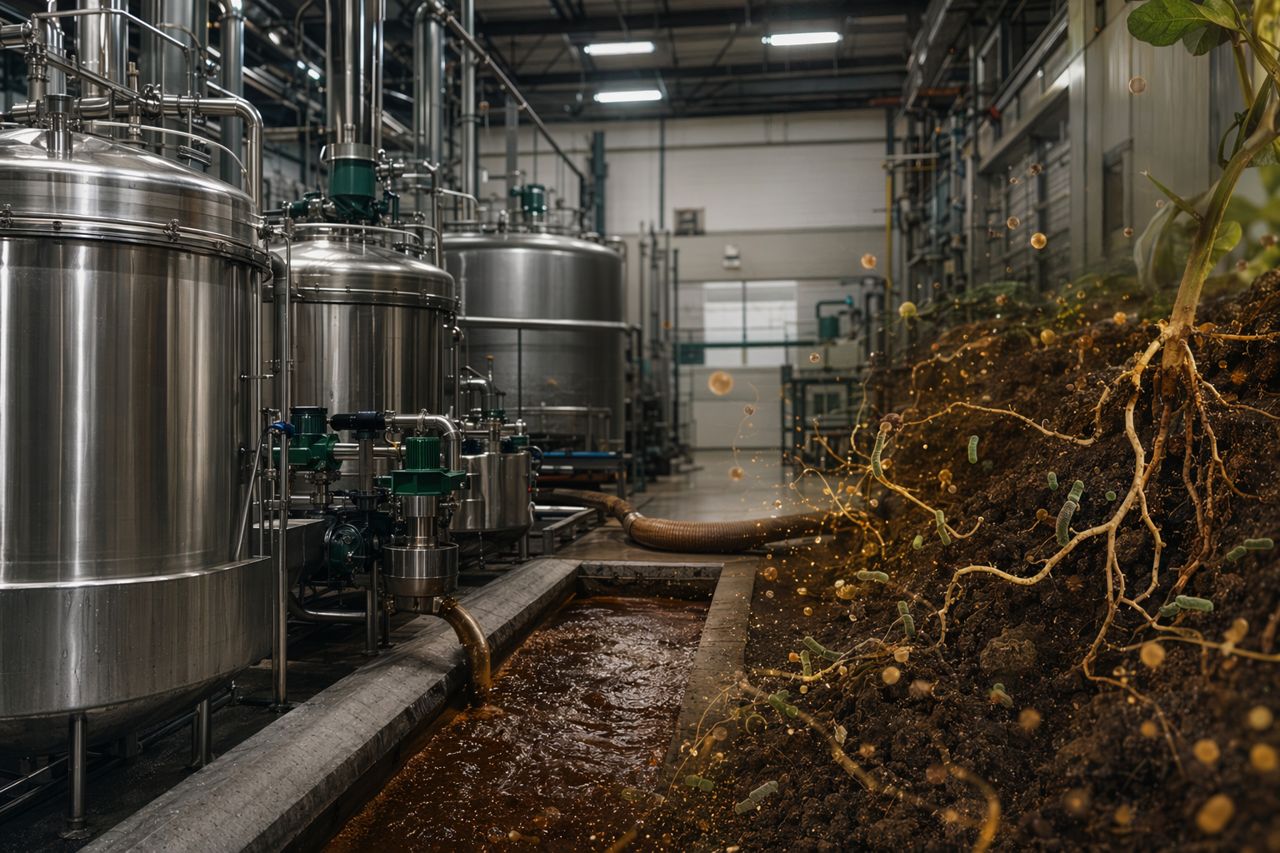
Biofertilizer production sits between biology and plant-floor discipline. Raw organic streams vary, living organisms need protection, and every batch has to move cleanly from fermentation or extraction into blending, carrier mixing, and packaging.
Rootwake Bioprocess supports manufacturers looking for an enzyme supplier for biofertilizer manufacturing with a practical focus: improving substrate conversion, reducing handling friction, and helping process teams build more consistent organic input and soil amendment products.
We work with producers developing or scaling:
- Compost extracts and compost-derived liquid inputs
- Fermented organic amendments
- Microbial inoculant carrier blends
- Soil conditioner and rhizosphere support formulations
- Plant-growth-promoting biological products
- Organic waste conversion streams used in biofertilizer production
Our role is not to overcomplicate your formulation. It is to help you choose enzyme families that match your substrate, process window, microbial system, and downstream handling requirements.
Enzymes considered for biofertilizer manufacturing
Biofertilizer manufacturers commonly evaluate enzymes to help break down fibrous, protein-rich, starchy, oily, or pectin-rich materials before or during formulation. The right enzyme approach depends on the material profile and the biological organisms that must remain viable in the final product.
Cellulases for plant-fiber breakdown
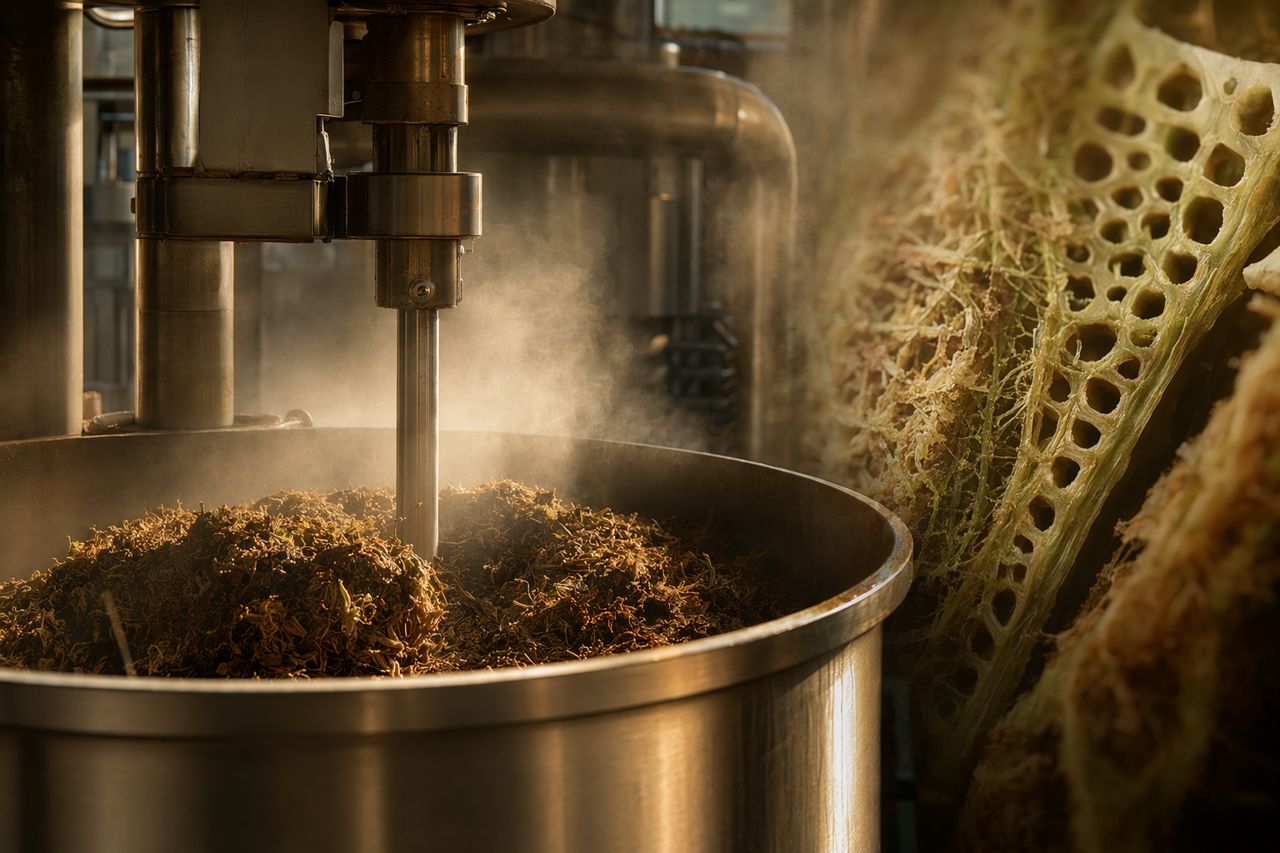
Cellulases are often considered when a process uses crop residues, composted plant matter, seed meals, husks, press cakes, or other lignocellulosic inputs. They can help open plant cell wall structures and support more accessible organic matter in extraction or fermentation systems.
For plant managers, the practical question is not simply whether cellulose is present. It is whether the enzyme can improve material flow, extraction behavior, solids management, and batch-to-batch repeatability without creating downstream issues.
Hemicellulases and xylanases for complex fiber streams
Many agricultural residues contain hemicellulose fractions that behave differently from cellulose. Hemicellulases, including xylanase-focused options, may be considered where fiber complexity affects mixing, filtration, sedimentation, or conversion speed.
These enzymes can be useful in processes built around cereal byproducts, bran-rich inputs, straw-derived materials, and mixed botanical substrates.
Pectinases for fruit, vegetable, and soft plant inputs
Pectin-rich substrates can hold water, create viscosity, and complicate separation or pumping. Pectinase families are commonly evaluated for fruit and vegetable residues, peel streams, pulps, pomaces, and botanical extracts used in organic fertilizer or soil amendment blends.
The buyer value is straightforward: better processability, more predictable extract behavior, and fewer surprises when raw material quality shifts seasonally.
Proteases for proteinaceous organic inputs
Protein-rich materials such as oilseed meals, legume residues, yeast-derived materials, and other nitrogen-bearing organic inputs may benefit from protease consideration. Proteases can support controlled protein breakdown, which may influence nutrient availability, fermentation behavior, and blend uniformity.
Selection should account for compatibility with beneficial organisms, target product profile, odor control priorities, and storage expectations.
Amylases for starch-containing feedstocks
Where starch-containing materials are used, amylases may help reduce viscosity and support conversion of cereal, tuber, or processing byproduct streams. In a biofertilizer plant, this can matter for tank turnover, transfer efficiency, and consistent preparation of fermentation feed or organic amendment bases.
Lipases for oily or fat-containing residues
Some organic fertilizer inputs include oilseed residues, food processing byproducts, or materials with meaningful lipid content. Lipases may be considered when fats interfere with dispersion, microbial access, or formulation stability.
The goal is not aggressive treatment for its own sake. The goal is controlled conversion that fits the rest of your biological and mechanical process.
Where enzymes fit in the production flow
Enzyme selection should be mapped to the process step where it creates measurable plant-floor value.
Upstream substrate preparation
Enzymes may be applied during pre-treatment of organic feedstocks to improve wetting, breakdown, extractability, or fermentation readiness. This can help standardize variable agricultural inputs before they reach the main biological stage.
Fermented organic inputs
In fermentation-based biofertilizer manufacturing, enzymes may support substrate availability for selected organisms. Compatibility is critical. The enzyme strategy should protect organism viability, avoid unwanted stress, and support the intended fermentation profile.
Compost extracts and liquid amendments
For compost extracts and liquid organic products, enzymes may help manage suspended solids, viscosity, and release of soluble fractions. The right choice depends on whether the plant prioritizes clarity, nutrient release, microbial compatibility, or pumpable consistency.
Carrier and soil amendment blends
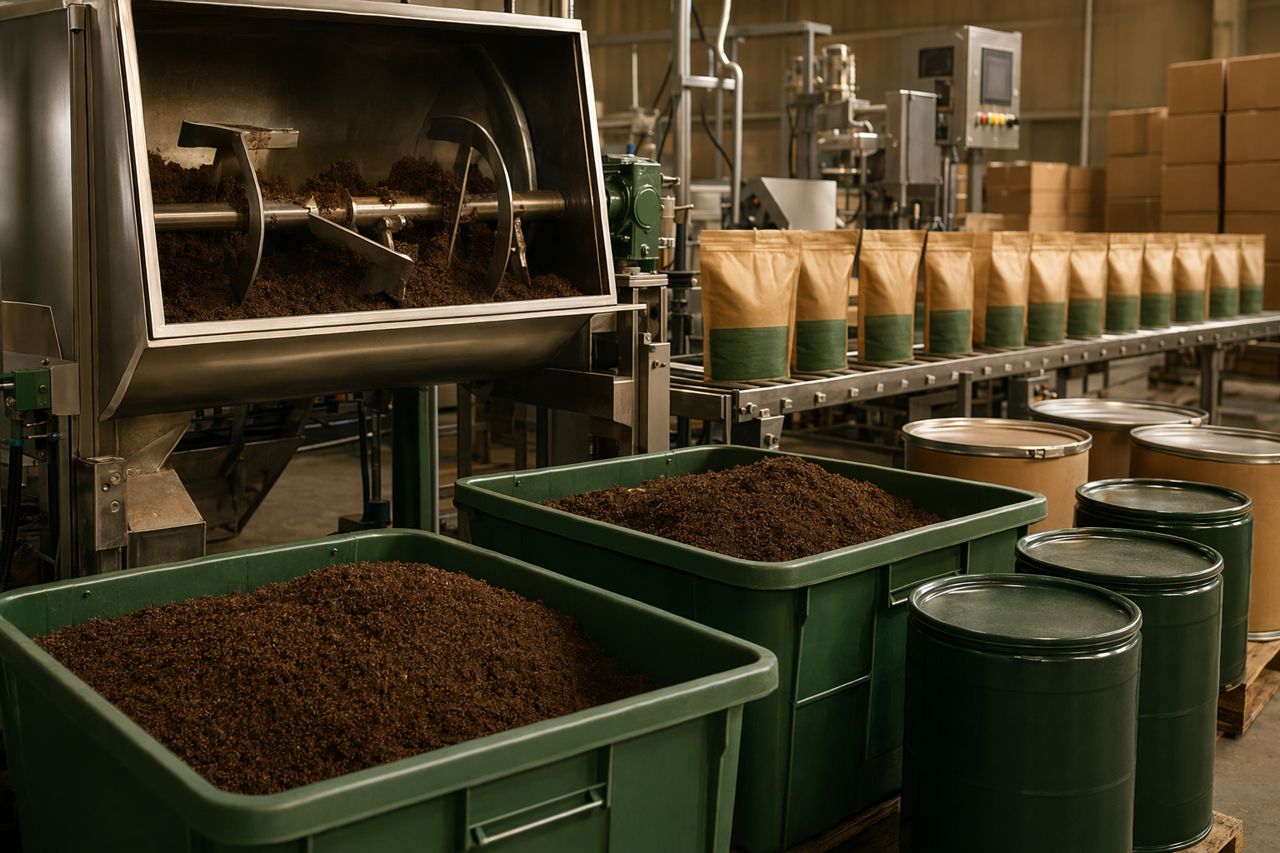
Dry and semi-dry carrier blends require attention to moisture, dispersion, storage, and organism survival. Enzymes used upstream should not create a product that cakes, separates, ferments unpredictably, or becomes harder to package.
What a production-aware enzyme supplier should help you evaluate
Choosing enzymes for biofertilizer manufacturing is a process decision, not a catalog decision. Rootwake Bioprocess helps buyers evaluate the conditions that matter on the factory floor.
Key considerations include:
- Substrate variability across crop season, supplier, and storage time
- Desired degree of organic matter breakdown
- Compatibility with microbial strains and inoculant viability goals
- Viscosity, settling, foaming, and pumpability behavior
- Impact on filtration, screening, or solids separation
- Fit with existing tanks, mixers, holding times, and packaging lines
- Storage stability and odor profile of the finished product
- Documentation, supply continuity, and repeat ordering reliability
Built for practical procurement conversations
Biofertilizer manufacturers do not need vague enzyme claims. They need a supplier that can discuss real production constraints: what is in the feedstock, what the process can tolerate, what the downstream line needs, and what the finished product must preserve.
Rootwake Bioprocess can support procurement, R&D, and plant operations teams with:
- Enzyme family recommendations based on substrate type
- Process-fit discussions for liquid, slurry, and carrier-based products
- Guidance on compatibility questions to test internally
- Commercial supply planning for recurring production
- Clear communication for quote requests and technical review
Typical buyer scenarios
You are standardizing a variable organic input
If crop residue, compost, or processing byproduct quality changes from batch to batch, enzyme selection may help reduce variation in extraction, mixing, or fermentation behavior.
You are improving handling before packaging
If a liquid amendment is difficult to pump, a slurry settles too quickly, or a carrier blend behaves inconsistently, the issue may be connected to incomplete substrate breakdown or poorly matched treatment conditions.
You are adding enzyme-supported processing to an existing microbial product
When living organisms are part of the finished biofertilizer, enzyme compatibility must be reviewed carefully. The target is improved substrate conversion without compromising the biological function of the product.
You are scaling from pilot work to plant production
A process that behaves well in small vessels may expose new issues in full-scale tanks, transfer lines, mixers, or filling systems. Rootwake Bioprocess helps connect enzyme choice to scale-up realities.
Why manufacturers work with Rootwake Bioprocess
Rootwake Bioprocess is built for the biofertilizer manufacturing vertical. We understand that enzyme buying is tied to production continuity, finished product consistency, and the practical realities of living systems.
Our approach is:
- Practical: focused on what changes in the plant, not abstract claims
- Controlled: matched to substrate, process step, and downstream handling
- Biology-aware: attentive to organism viability and formulation stability
- Supply-minded: responsive to repeat manufacturing and procurement needs
- Quietly technical: clear enough for purchasing, useful enough for operations
Request a quote
If you are looking for an enzyme supplier for biofertilizer manufacturing, tell us what you are making, which substrates you use, and what process issue you want to improve.
Use the on-site request form to share:
- Product format: liquid, slurry, granule, powder, carrier blend, or other
- Main organic inputs or feedstocks
- Current process step where enzymes may be used
- Target improvement: conversion, viscosity, solids handling, fermentation support, or consistency
- Estimated purchasing stage and supply frequency
Request a quote through the form below, and Rootwake Bioprocess will respond with a practical enzyme supply discussion for your production needs.