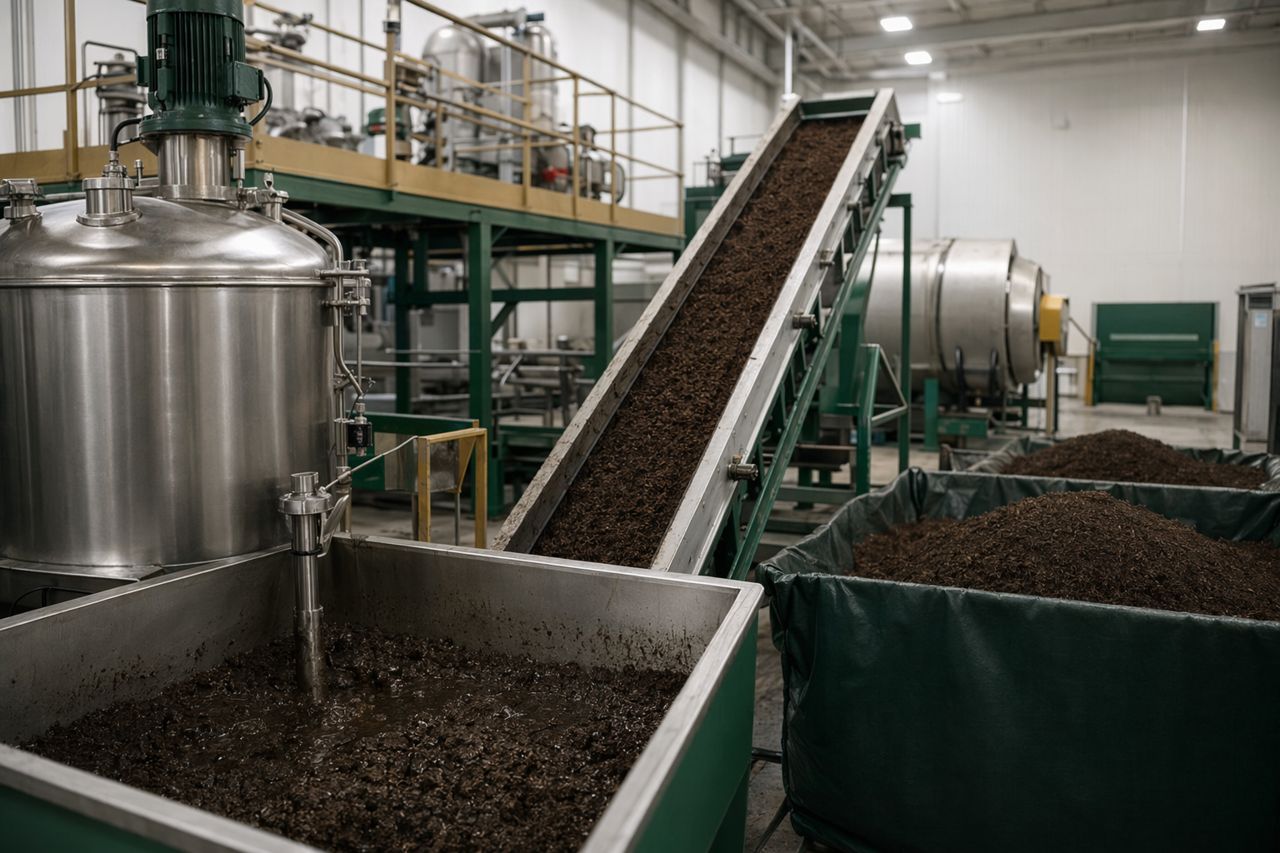
How Biofertilizer Plants Are Moving from Commodity Compost to Formulated Soil Amendment Products
Commodity compost still has a place in agriculture. It supplies organic matter, improves soil feel, and gives growers a familiar input. But for biofertilizer manufacturers, bulk compost alone is becoming a harder product to defend.
Margins are tight. Feedstock variation is constant. Moisture, odor, particle size, and biological stability can shift from pile to pile. Downstream, that inconsistency shows up as blending delays, screening losses, packaging problems, and field performance that is difficult to position as anything more than a low-cost soil conditioner.
Formulated soil amendment products move the plant in a different direction. Instead of selling processed organic matter by weight, the manufacturer sells a repeatable biological and biochemical function: better nutrient cycling, improved root-zone activity, more predictable carrier behavior, and improved compatibility with selected microbial organisms.
That shift changes the role of process inputs. It also changes what a plant should expect from an enzyme supplier for biofertilizer manufacturing.
From bulk material to controlled function
A commodity compost operation is usually judged on throughput, moisture reduction, odor control, and basic market acceptance. A formulated biofertilizer or soil amendment line has a more demanding target.
The finished product needs to be:
- Consistent enough for branded distribution
- Compatible with microbial inoculants or beneficial organisms
- Practical to blend, granulate, dry, coat, or pack
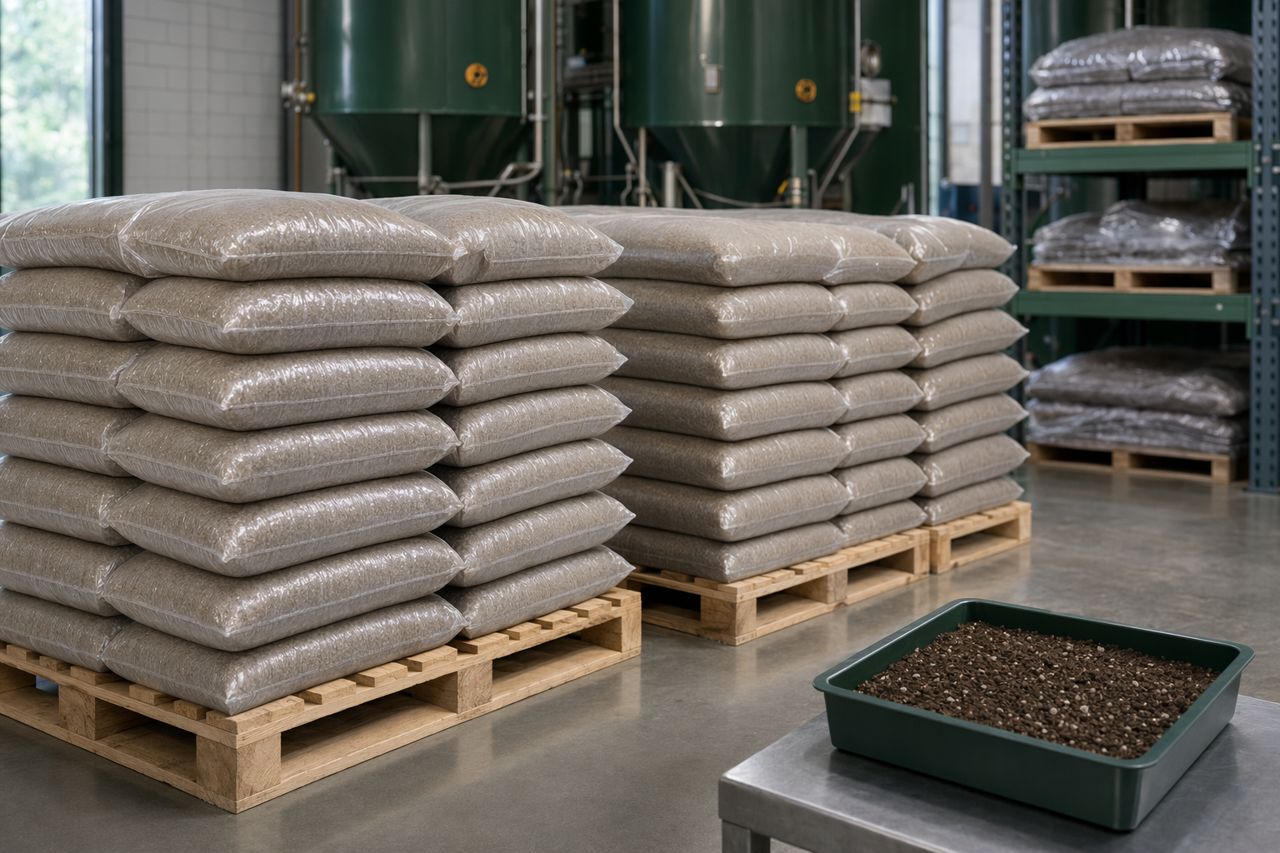
- Stable enough for storage and shipment
- Clear in its agronomic positioning
- Economical enough to scale beyond trial batches
This is where production discipline matters. Formulation is not only a marketing decision. It is a plant-floor decision involving substrate selection, bioprocess conditions, carrier preparation, biological compatibility, and downstream handling.
Why commodity compost is under pressure
Many biofertilizer plants start with compost because it is available, familiar, and relatively forgiving. The problem is that compost is rarely uniform.
Common production issues include:
- Variable lignocellulosic content across feedstock lots
- Inconsistent humic character and maturity
- Excess fines or oversized particles after screening
- Odor and heat issues during storage
- Unpredictable water-holding behavior in carriers
- Difficult blending with microbial cultures or liquid amendments
- Packaging weight drift due to moisture variation
For a local bulk amendment, those problems may be manageable. For a branded biofertilizer product sold through distributors, they become expensive. A distributor wants repeatability. A grower wants confidence. A plant manager wants fewer surprises between incoming material and finished pallets.
What makes a soil amendment formulated?
A formulated soil amendment is built around intended function, not only raw material origin.
That function may include:
- Supporting microbial establishment in the rhizosphere
- Improving nutrient release from organic inputs
- Conditioning carriers for better culture distribution
- Helping organic substrates become more processable
- Supporting more uniform granules, powders, or coated products
- Creating a better environment for organism viability during storage
The formulation may include composted material, humates, meals, minerals, microbial cultures, fermentation byproducts, soluble nutrient sources, or carrier systems. Enzymes can support the transition by helping convert complex organic substrates into more usable or manageable fractions before, during, or around the formulation step.
Where enzymes fit in a biofertilizer plant
Enzymes are not a substitute for good composting, fermentation control, or microbial formulation practice. They are process tools. Used correctly, they help the plant manage biological complexity with more consistency.
For a biofertilizer manufacturer, enzyme applications often sit in four practical areas.
1. Substrate conversion
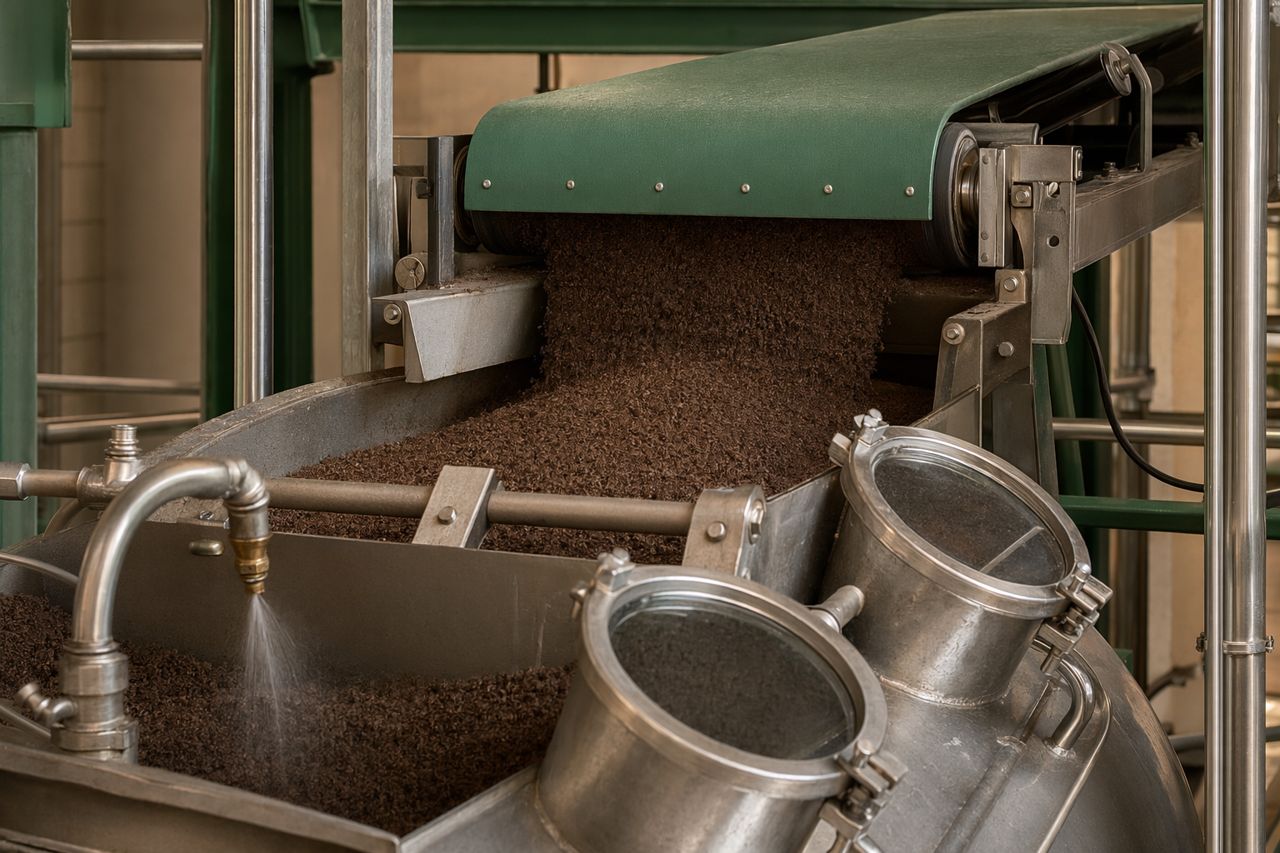
Organic inputs such as plant residues, meals, brans, cakes, and compost fractions can contain complex carbohydrates, proteins, phytate-bound nutrients, and structural fibers. Enzymes can help convert selected fractions into forms that are easier to process or more available within the intended amendment system.
For the plant, the value is not theoretical. Better conversion can support smoother mixing, more predictable solids behavior, and a more consistent base for microbial or nutrient formulation.
2. Carrier conditioning
Carriers are not passive fillers. Their structure, moisture behavior, particle profile, and interaction with organisms affect the finished product.
Enzyme-supported conditioning can help adjust organic carrier behavior before inoculation or blending. The goal is to support uniform distribution, reduce handling friction, and avoid creating a carrier environment that is hostile to living organisms.
3. Downstream handling
A promising formulation can fail if it does not move through the plant. High viscosity liquids, sticky wet solids, poorly flowing powders, or unstable slurries create downtime and rework.
Enzymes can help manufacturers improve processability by reducing troublesome substrate behavior and supporting cleaner transitions into blending, granulation, drying, coating, or packaging.
4. Organism compatibility
Biofertilizer products often depend on viable bacteria, fungi, or spore-forming organisms. Any process aid must be evaluated in relation to the culture system, carrier, pH range, storage profile, and contact sequence.
A production-aware enzyme supplier should help the plant think through compatibility before scale-up, not after a batch is already committed.
The plant-manager view: consistency beats novelty
New formulation ideas are easy to generate. Reliable production is harder.
Plant managers usually care about questions such as:
- Will this input behave the same way across batches?
- Can operators dose and handle it without special disruption?
- Does it fit the existing mixing, holding, and packaging sequence?
- Will it create foam, odor, viscosity, heat, or separation problems?
- Does it support organism viability rather than compromise it?
- Can the supplier deliver when production runs are scheduled?
This is why enzyme sourcing should not be treated like catalog shopping. The enzyme may be one line item, but it touches multiple parts of the process.
What to ask an enzyme supplier for biofertilizer manufacturing
When evaluating an enzyme supplier for biofertilizer manufacturing, look beyond a product name. Ask how the supplier supports production reality.
A practical supplier should be able to discuss:
- Feedstock variability and how it affects enzyme selection
- Compatibility with microbial cultures and carrier systems
- Liquid versus dry format handling considerations
- Addition points within your process flow
- Storage and transport requirements
- Batch documentation and supply continuity
- Scale-up risks from pilot runs to routine production
- How to avoid overcomplicating the formulation
The best supplier conversation starts with your process map: incoming materials, conversion step, hold time, blending sequence, organism addition point, carrier type, final product format, packaging, and storage expectations.
Moving from compost sales to formulated product lines
The transition does not need to happen all at once. Many manufacturers begin by selecting one product family where formulation control can create a clear commercial advantage.
A sensible development path may look like this:
- Identify the target soil function or crop-use case.
- Define the carrier and organic substrate system.
- Map current production bottlenecks.
- Screen enzyme options for substrate conversion and handling benefits.
- Check compatibility with the organism or inoculant strategy.
- Run controlled pilot batches using plant-relevant materials.
- Validate downstream behavior through packaging and storage.
- Build supplier lead times into production planning.
This approach keeps the work grounded. The objective is not to make the most complex label. The objective is to make a soil amendment product that the plant can produce repeatedly and the market can trust.
Enzymesportal perspective
Enzymesportal supports manufacturers that are building more controlled biofertilizer and soil amendment lines from variable organic inputs. Our role is to help production teams think through enzyme fit in relation to substrate conversion, carrier behavior, downstream handling, and organism viability.
For plants moving beyond commodity compost, the opportunity is not just a premium label. It is a more dependable manufacturing model: fewer batch surprises, cleaner process decisions, and products with clearer functional intent.
Planning a formulated amendment line?
If your plant is developing a new soil amendment product or improving an existing biofertilizer process, Enzymesportal can help evaluate enzyme options around your actual materials and production flow.
Request a quote and tell us about your substrate, carrier, organism strategy, and finished product format.